A Flower For Hummingbirds

August 11, 2026

The Ruby-throated Hummingbirds (Archilochus colubrid) that come to my yard know that I grow some plants just for them.

Plants that seem designed for the hummingbirds’ color preference of brilliant red, with flower shapes that are perfect for their long beaks. Blooms that have deep pockets of nectar, managing to position their pollen perfectly to be taken by the hummingbirds’ heads from one flower to another.

This flower is Cardinal Flower (Lobelia cardinalis). One of many flowers in my garden, planted for the hummingbirds.

_______________________

If you would like to receive my daily blog posts by email, sign up here!

Which Skink Is It?

August 10, 2026

Striking a pose for my camera, a skink is captured in pixels scampering outside my cabin. This is either a Common Five-lined Skink (Plestiodon fasciatus) or a Broad-headed Skink (Plestiodon laticeps). At this stage in their lives, it is quite a challenge to distinguish one species from the other.

Whatever the species, they are entertaining to have running up and down the cedar siding here, hunting for many things including, spiders, crickets, beetles, grasshoppers, caterpillars, termites, millipedes and even newborn mice.

Charming little creatures eating things that I would rather not have around.

_______________________

If you would like to receive my daily blog posts by email, sign up here!

Goldfinch Enjoying Late Summer Bounty

August 9, 2026

 An American goldfinch (Spinus tristis), enjoying the late summer bounty of seeds available to him. He’s sitting atop a bunch of Gray-headed Coneflowers (Ratibida pinnata).

Goldfinches amuse me as they approach something that they want to get seed from. Landing on a bunch or a stem and slowly sinking as it takes on the bird’s weight.

Going down.

_______________________

If you would like to receive my daily blog posts by email, sign up here!

Oh The Pollinators

August 8, 2026

I’ve always admired the ability of Apple Mint (Mentha suaveolens) to attract pollinators. It’s not a native plant, which normally would really discourage me from planting it, and in many circumstances it is quite the aggressive plant, which would be an additional strike against it. But my back hill is perfect for keeping it under control. And as I said, it attracts an incredible number of pollinators.

Yesterday I noticed there were at least 10 Tiger Swallowtails (Papilio glaucus) busy at the blooms.

The flowers of the Apple Mint seem to be always buzzing with the activity of these and other butterflies, and an assortment of bees large and small, moths, syrphid and tachinid flies, and many more.

One busy patch of mint.

_______________________

If you would like to receive my daily blog posts by email, sign up here!

Rudbeckia Hirta Maryland State Flower

August 7, 2026

Black-eyed Susan (Rudbeckia hirta). This, the Maryland state flower, is thinking of blooming. They’re just buds right now, but in just a few days they’ll be in full bloom. Maryland is the state where I was raised. A state I am mighty proud to claim as mine.

This Black-eyed Susan is said to be an annual or sometimes a biennial or perennial. That’s a bit confusing. In my gardens though, I find them to be biennials. That means it is a plant that has a 2 year biological life. During its first year it simply grows roots and stems with no blooms. It is dormant over the winter and blooms, creating seeds, and dies in the second year.

I can hardly wait for the blooms to happen.

_______________________

If you would like to receive my daily blog posts by email, sign up here!
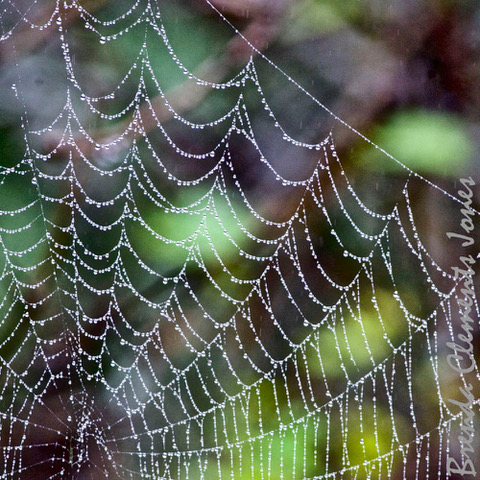
Three American Chestnut Burrs

August 6, 2026

Years ago I did volunteer work for the Virginia Chapter of The American Chestnut Foundation. I learned many things about what has happened to this precious tree, the American chestnut (Castanea dentata), since the blight (Cryphonectria parasitica) was first accidentally introduced to North America in 1904.

Sometime during my years with TACF I was able to get 12 pure American Chestnut seeds which I planted down the hill in front of my cabin. As they sprouted, many of them succumbed to the blight and died. There are still 3 of those trees living, though each one has signs of the fungal disease. Who knows, they may still live for years to come. What will happen in that case, the tree will become more like a bush, unlike what would have been a stately tree. The top portions will die back, but the roots will live on, and with determination send up new sprouts.

Over the past couple years, these 3 have bloomed. Much to my amazement, a couple days ago, I discovered that they have produced 3 American Chestnut burrs!

I am totally delighted!

_______________________

If you would like to receive my daily blog posts by email, sign up here!
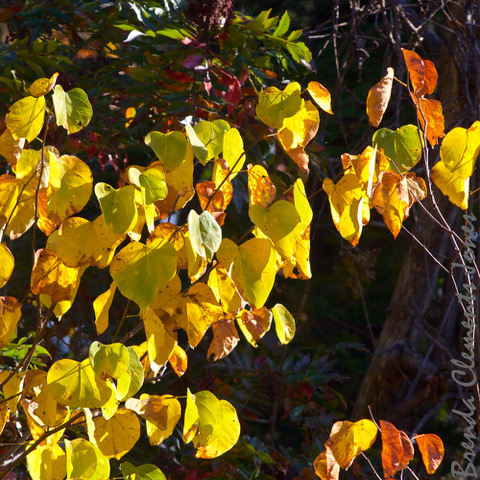
Smooth Sumac Starting Autumn A Bit Early

August 5, 2026

The calendar page has just turned to August and the Smooth Sumacs (Rhus glabra) are beginning to show that autumn is soon to arrive.

Not all (yet) but some of these long compound leaves are a brilliant scarlet. They’re reacting to the subtle shortening of daylight hours.

A few of the trees around here, including the small tree, Smooth Sumac, begin turning color before many of the others. That makes their color change extra special.

_______________________

If you would like to receive my daily blog posts by email, sign up here!

Memories Of Stellafane

August 4, 2026

Going through photos from long ago this afternoon. One bunch brought back many fond memories of going to Stellafane, an astronomy convention held on Breezy Hilll, at Springfield, Vermont. I attended Stellafane for almost 20 years, and needless to say, it was great fun. Looking through a wide variety of telescopes in mid-August for several nights in a row. This year is going to be their 90th convention.

The one image that captured great memories was not a night shot, but is from a hike in the woods. After all, you need something to do in the daytime as well. On this particular hike I came upon this cluster of mushrooms, Macropsalliota americana, to be exact.

This mushroom can be found in many areas of North America though it is most common east of the Rocky Mountains. It feeds on dead or decaying matter, such as sawdust, wood chips and stumps.

The picture makes me think of a momma hen with her little chicks.

_______________________

If you would like to receive my daily blog posts by email, sign up here!

Waiting For A Turn At The Birdbath

August 3, 2026

A juvenile female Goldfinch (Spinus tristis), patiently waiting with others to get a chance to take a dip in the birdbath. As they waited they filled the air with their sweet twittery sounds.

I love to hear that twittering.

_______________________

If you would like to receive my daily blog posts by email, sign up here!

A Blue-winged Wasp

August 2, 2026

The Blue-winged Wasp (Scolia dubia), found from New England south to Florida and west to California in the United States, and as far south as Coahuila, Mexico.

A wasp that has a length of from .8 to 1.0 inches. Japanese beetle grubs and other scarab beetle larvae are eaten by the larvae of these wasps.

Sounds like a good wasp to have around.

_______________________

If you would like to receive my daily blog posts by email, sign up here!